
Carnival in Epirus
Programme
🎭 3-day trip to Carnival Epirus
Fires, stone, dance and mysticism
Epirus during Carnival doesn't just have fun.IT CELEBRATES.With fires that warm up the night, gaitanakia that connect people and places, and landscapes that leave you speechless.
A 3-day trip that combines authentic Carnival customs, unique nature and cities with soul.
🗓 Saturday – Arta | Gaitanakia & Fires
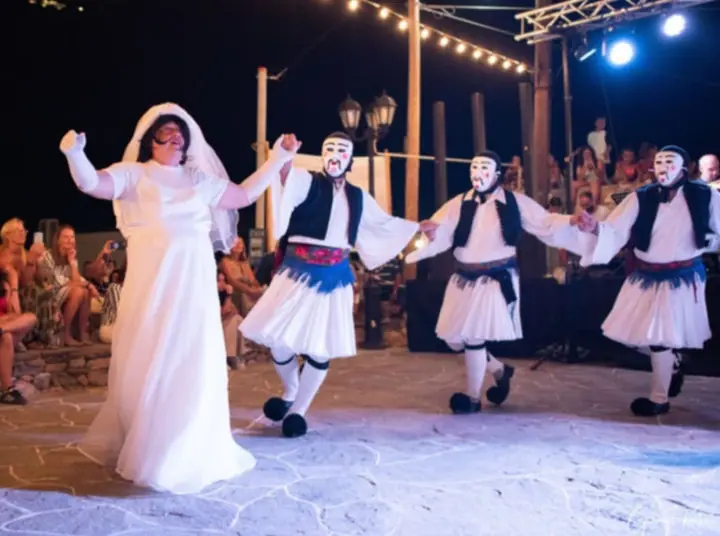
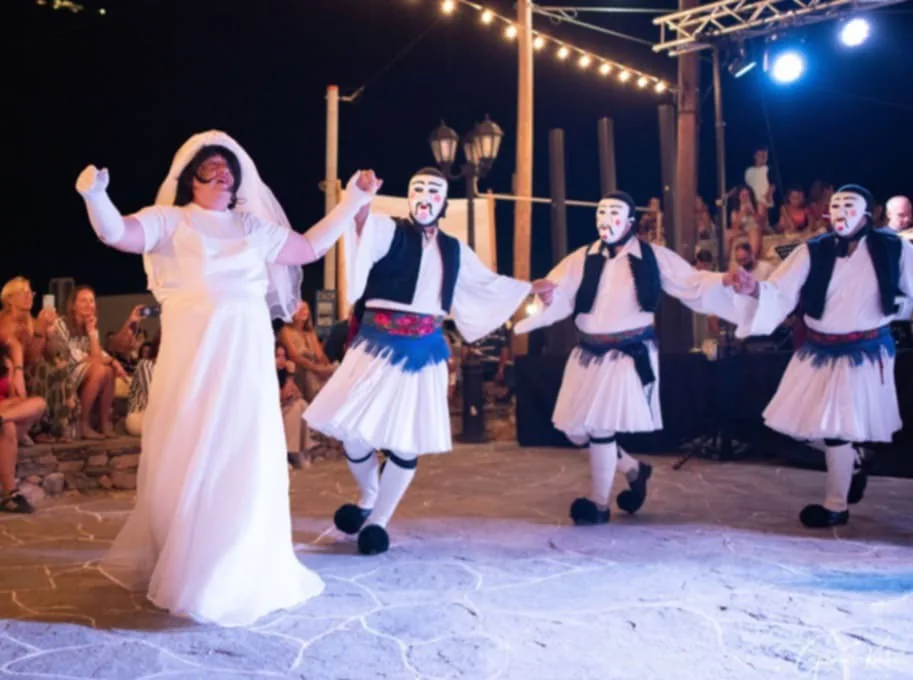
Arrival in Arta and immediate dive into the Carnival atmosphere.The city is filled with colors:gaitanakia, traditional dances and music in the squares.
In the afternoon and evening, the experience culminates with the bonfires and fires.Flames, song, wine and people around the fire —a Carnival night like the old days.
Overnight stay.
🗓 Sunday – Zagori, Ioannina & Grammenitsa
Sunday is dedicated to nature, stone and ritual.
Morning: Departure for Zagori.First stop in Monodendri, with its impressive view and traditional architecture.We continue to the Gardens, among stone bridges and a landscape that looks like a painting.Free time for coffee, photos and a walk.
Noon: Arrival in Ioannina.Stroll around Lake Pamvotida, the historic center and time for food.
Afternoon: Return to the Arta area and culmination of the day in Grammenitsa.There we experience the mystical gaitanaki of Greece —a unique, almost ritualistic event, that you don't just watch…you participate.
Overnight stay.
🗓 Clean Monday – Koronisia | Koulouma in the Lagoon
Departure for Koronisia.Koulouma in the Ambracian lagoon:Lenten dishes, kites, sea breeze and absolute serenity.
A calm and poetic finale, as befits after the fire and dance.
Then we depart for the enchanting Nafplio to see the traditional Koulouma of the area!
Next, we depart for Nafplio where we will participate in the Traditional Koulouma of the area with orchestras and Lenten delicacies at the port!
🎭 Carnival in Epirus and Arta – Folkloric Approach
Carnival in Epirus is one of the most important traditional ritual sets in the Greek area, with intense elements of archaic rituals, social cohesion and symbolism related to fertility, purification and the rebirth of nature.
The central role in the Epirotic carnival customs is played by fire. The carnival fires – known locally as brases – are lit in squares and neighborhoods and function as a means of purification and warding off evil, but also as a point of community gathering. Around the fire, dance, song and satire develop, basic characteristics of the carnival.
In Arta, the carnival tradition is preserved with particular consistency. The gaïtanakia, the circular dances and the participation of local clubs reflect the collective character of the celebration. The gaïtanaki, with its multicolored ribbons and strict geometry of movements, symbolizes the unity of the community and the cycle of life, while at the same time functioning as a ritual of transition from winter to spring.
The mystagogic element of the carnival events in the wider area of Arta is of particular interest, where the ritual, the repetition of movements and the collective participation evoke pre-Christian agricultural cults, which were incorporated into folk tradition. The absence of theatricality and the direct participation of the inhabitants enhance the experiential character of the customs.
In total, Carnival in Epirus and especially in Arta constitutes a living carrier of folk culture, where the past interacts with the present. It is not a representation of customs, but a continuous cultural practice that is transmitted from generation to generation and still constitutes a basic element of local identity.
🌿 The islet of Ambracian
🌿 The islet of Ambracian – Nature and Tradition
Koronsia is a small insular settlement within Ambracian Gulf, connected to the mainland by a narrow strip of land. This place is part of one of the most important wetland ecosystems in Greece, where human activity coexists with an extremely rich natural environment.
The Ambracian Gulf hosts significant fauna, with an emphasis on birdlife. In its lagoons and shallow waters, you can find flamingos, herons, silver pelicans, cormorants, and kingfishers, as well as many migratory species that find refuge here. The waters of the gulf are also rich in fish, which explains the long-standing fishing tradition of the area.
The flora of the Ambracian Gulf is characterized by extensive reeds, salt marshes, and plants resistant to the salty environment, such as tamarisks and hydrophilic species. The landscape changes subtly with the seasons, offering a serene, almost secret beauty that enhances the contemplative character of the place.
Within this environment, Koronisia maintains a simple and authentic way of life, inextricably linked to nature. Clean Monday and the Koulouma take on a special symbolism here: humans, tradition, and landscape coexist without noise, in a space where nature has the first say.
Visiting the island of the Ambracian Gulf is not just a trip stop, but an acquaintance with a living wetland, where cultural memory and natural heritage form a single entity.
On Clean Monday, Koronisia becomes a meeting point for locals and visitors seeking traditional Koulouma in a natural landscape. On the small island, within the Ambracian lagoon, the day unfolds with simplicity and collectivity, as in the old days.
Groups gather in the outdoor space and along the coastal road, where Lenten delicacies prevail: lagana, tarama, olives, legumes, and seafood. The aromas blend with the sea air, and the landscape remains the protagonist.
Kites fill the sky above the lagoon, creating a serene and almost ritualistic image. There is no loud music or organized spectacle; the celebration is based on participation, companionship, and contact with nature.
Clean Monday in Koronisia serves as a transition: from the intensity of Carnival to the serenity of Lent. It is a day that perfectly matches the character of the place — simple, authentic, and deeply connected to the Ambracian environment.




Would you like us to run it again?
Ask us about the next time
Call us or leave a message and we will call you back.